•  
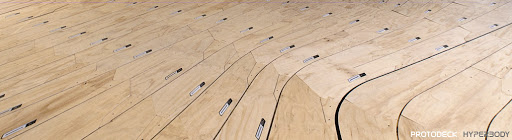
      • Progression Through Unlearning MSc 3 infoMATTERS Design Studio 2010 | Tutor: Dr. Nimish Biloria | Students: Arie Willem De Jongh, Mingu Seol & Bao An Nguyen Phuoc
      • Hyperbody Spring 2012
      • Forward to basics
  • The world is changing. So is architecture, the art of building. Architecture will never be the same, since the world is evolving its communication and manufacturing methods are changing drastically and with increasing speed. My theory and practice of architecture is based on the principles of swarm behavior. It comes down to the provocative assumption that all building components must be designed to be active actors. I have come to the conclusion that buildings and their constituting components no longer can be seen as passive objects. This assumption revolutionizes the way we organize the design process, the way we organize the manufacturing process, and the way we interact with the built structures. The new kind of building is based on the invasion of digital technologies into the building industry. Such as parametric design, generative components, file to factory production process of mass customization, embedded intelligent agents. Step by step we are balancing the familiar top down control with emergent bottom up behaviour. We rethink the basic building blocks and we build bottom up bidirectional relationships between all constituting building components. I will dive into the effects the paradigm shift from mass production to mass customization may have for the designers mind. When the designer is open for this new reality, architecture will no longer be the same. Within 50 years this new reality will be the common language of international architects. If my assumption proves to be false after all efforts I have done in the last 20 years to develop the practice of industrial customization in the realized works of the architectural office ONL [Oosterhuis_Lénárd] in Rotterdam, and to develop during the last decade the theory of swarm behaviour in various educational and research projects with my research group Hyperbody at the Faculty of Architecture of the TU Delft, I will be the first to acknowledge that. But if it proves to be right then you as a student of Hyperbody will consume the pleasure of having been an early mover to design and construct buildings according to the new rules of industrial customization, and you will feel satisfied having explored the fascinating consequences of swarm behaviour for the profession of architecture when the theory was still fresh and new.


    Everyone is emotionally struck by the sight of a swarm of birds flocking in the air. Much has been said about the simple rules that the birds are executing when flocking. The birds are constantly aware of their neighbours, avoiding collisions, keeping mutually agreed distance, adapting to the neighbour´s direction, always striving at a central position in the flock. Their flocking behaviour has been modeled in simple computer graphics by Craig Reynolds [red3d.com] back in 1986. He made a computer model of animal motion, scripting the rules for virtual creatures he named boids, based on three dimensional computational geometry. Why is it that I am so interested in boids and swarms? Why did I introduce the term swarm architecture back in 2001 during the first Game Set and Match Conference that Hyperbody organized at the TU Delft? My objective has been clear from the beginning: I wished then and still wish now to identify all possible building components as interacting actors building up bidirectional relationships with each other. The idea of behaviour has always intrigued me since it defines the foundations for an architecture that is not static but animated in real time. Animated not as described by Greg Lynn in his book Animated Form [1998], who de facto claimed his “license to kill” the animation, but animated in its purest sense, that is keeping the structure informed, much like the living flock of birds. I concluded that there is no meaning in freezing the motion. I realized that it was necessary to use actual ICT technology to sustain the information flow throughout the full life-cycle of a built structure.


    As the world keeps turning we will need to redefine the foundations of architecture from time to time. Now more then 20 years have passed since the introduction of the PC, since the emergence of the global Internet, since embedding miniaturized information technology in our consumer products. Today we have become familiar with remote control, wireless internet, with intelligent agents active on the internet, with intelligent agents embedded in consumer products like printers, cars and computers, but we have not seen much change in the very building blocks of the built environment. Neither have we seen much change in the way we design and build our environment. We have indeed developed computer programs to simulate otherwise traditional building materials like concrete, steel, glass, composites in a Building Information Model [BIM]. The simulated building components are tagged, the tags containing information on their qualitative and quantitative properties. Most architects do not use computer technology in the way they design, even on respected universities the students are told not to use the computer to design. This proves once again how slow the building industry and their seconds on the educational institutes are catching up with new technologies. But is not my aim to complain, on the contrary, I want to show a possible way forward, forward to the basics of the profession of architecture. To take that step forwards I imagine the built structure to be represented by a point cloud of acting reference points, reference points that move all the time like the birds in the swarm. The points of the point cloud are continuously informed to behave, the points receive streaming information. The points process the streaming information. The points produce new streaming information. Indeed like the birds in the swarm. Suppose the information defining its spatial coordinates which is received is not changing, then the position of the point in the point cloud remains stable, it does not change its position. Now suppose some data are changing, then the point will act accordingly and change its position, or change any of the other properties the point has been tagged with. The crux of the new kind of building is that all reference points will be informed both during the design process and during its subsequent life-cycle. Even if we are commissioned to design for a static environment, we must set up the Building Information Model [BIM] in such a way that all constituting components potentially can receive, process and send streaming information. The Building Information Model will understand its new meaning as Building In Motion.


    Now what is the specific condition of the artist formerly known as the architect? There are hundreds of specific tasks to be fulfilled, and one person, or one team of experts including the signature architect may adopt a number of these well specified tasks. Analyzing my own practice I suggest the following tasks to be adopted by the signature architect. The new kind of architect launches the concept in a few simple lines of script, to be quantified in a few essential parametric values, via the graphic interface of the script directly linked to relevant external data feeding the quantitative aspects of the concept. During the fulfilment of the tasks the new kind of architect requires an active participation of other experts. The active participation includes the financial expertise of the client as to supply the designer with relevant data in due time, as early as possible in the design process. And including the active participation of CNC equipped manufacturers as well, who are responsible for verifiable tender budgets, based on precise data from the swarm of experts. Data must be verifiable, while all experts will be held responsible not only for their qualitative and quantitative data, but for the financial logic of their expert input as well. Everything that is related to geometry must be the responsibility of the new kind of architect. And then I indeed mean literally everything, including the geometry of the structure and the geometry of all components of the climate installation. When there is a debate on the shape, any shape, it must be the form giving expert who is responsible. The engineering partners must calculate the quantity, performance and effectiveness of the flow inside the given shapes, be it spaces, structural components or air ducts. The geometry of things belongs to the realm of the spatial form designer, calculation to structure designer and climate designer. This is the most straightforward definition I can think of. Shape and concept is the domain of the artist formerly known as the architect, performance and calculation is the domain of the artist formerly known as the architect engineer. At the same time it must be underscored again that geometry and computation must be bilaterally connected as from scratch in all possible aspects, bringing both the shaper and the calculator in the position of a creative designer. One can design with shapes, one can design with numbers, both are equally important. This straightforward definition of the work covers every possible act in the design process, and this definition certainly will cater for a better integration of the disciplines.


    Hyperbody education means forward to basics since we do not want to look back. We do not look in the back mirror to see the what is behind us, we simple look around and appreciate what we see. Now in 2011 it is the perfect time for an accelerated innovation in the architecture and construction business. It is a time of rethinking the basis of our society, after the internet bubble and the mortgage crisis shaking the foundations of society. It is the proper time to implement streaming nonstandard customized strategies in all businesses related to the building industry, from designers to manufacturers, and speaking for myself, the perfect time to develop Hyperbody´s protoBIM / protoNET / protoSPACE innovations based on the principles of swarm behaviour to inspire the expert artist formerly known as the architect to design and engineer the new kind of dynamic building. Forward to basics does not mean to step back to what we knew already 20 years ago, that would be back to basics. Forward to basics means redefining our core business, redefining architecture, redefining the building industry, redefining the behaviour of built structures. Redefining the very essence of our profession.


    Kas Oosterhuis
    Professor Hyperbody, TU Delft
    [www.hyperbody.nl]
    Principal ONL [Oosterhuis_Lenard] 
    [www.oosterhuis.nl]


    Excerpts from the book “Towards A New Kind of Building” by Kas Oosterhuis [NAi Publishers 2011], Chairholder Hyperbody. TANKOB is for sale at the BK bookshop.